
Juvenile Release Destinations
The Shawnee County Juvenile Detention Center is a short-term county juvenile facility. It is not the adult jail and not the state Kansas Juvenile Correctional Complex. A release may place a juvenile with a parent or guardian, an approved home or program, another juvenile agency, or another destination directed by the court. The exact destination can be protected because it concerns a child and an active juvenile matter.
“Release” still describes the end of one custody placement. It does not promise unrestricted community status. A placement transfer can end detention at this building while supervision or custody continues elsewhere. Only an authorized agency or court record can resolve that distinction for a named juvenile. Public-facing adult tools should never be represented as a substitute.
Confirm Juvenile Release Lawfully
The adult current-custody portal, daily adult booking report, Kansas VINE adult county-jail service, and KASPER adult supervised-population search are not normal public juvenile-release channels. An authorized guardian should contact the facility or the juvenile’s attorney. Counsel can use the court case and agency records within the access rules that apply to the matter.
- Confirm your role and authority before requesting any information about the juvenile.
- Contact the Juvenile Detention Center using the official county number and provide only the identifiers the agency requests.
- Ask the juvenile’s attorney or assigned court professional about the controlling order and approved destination.
- Use the court clerk route only as permitted; many juvenile and child-in-need-of-care matters are excluded from public access.
- Follow the receiving juvenile agency when the event was a placement transfer rather than a return to a guardian.
The general Shawnee County release overview explains why adult custody systems must be separated, but it does not override juvenile confidentiality. A person without authorized status should not expect the facility to confirm custody, release, or placement details.
Note: Restricted access protects the juvenile; a public no-result cannot be turned into a claim about what happened.
Juvenile Center Contact Route
Shawnee County Department of Corrections operates the Juvenile Detention Center. The facility can route an authorized inquiry, but it may limit what can be disclosed. A caller should be ready to establish identity and legal relationship to the juvenile. The agency, court, guardian, and attorney are the appropriate channels, not a public adult search.
Shawnee County Juvenile Detention Center401 SE 8th Avenue
Topeka, KS 66607
785-251-7700
Office fax: 785-251-4963
Shawnee District Court Records is at 200 SE 7th Street, Room 209, Topeka, KS 66603, with records telephone 785-251-6712 and weekday hours from 8 a.m. to 5 p.m. Those public contact details do not mean the underlying juvenile file is open. Court staff apply the access rules to each request.
Juvenile Detention Center Facts
The county lists a capacity of 70 for this Juvenile Detention Center. Capacity describes the facility, not current occupancy or release volume. The center stands apart from the Adult Detention Center and from the state juvenile complex. Keeping those three identities separate prevents an adult booking record or state facility source from being attached to the wrong juvenile.
The present county detention structure developed alongside the Adult Detention Center additions completed in 1998. That shared campus history does not merge the records. Adult bookings and juvenile matters remain distinct, and a records custodian may withhold or restrict information that would be public in an adult case.
Juvenile Court Record Limits
The Kansas courts record-access page explains that public online access has limits, including juvenile matters. A successful research image captures those access boundaries.
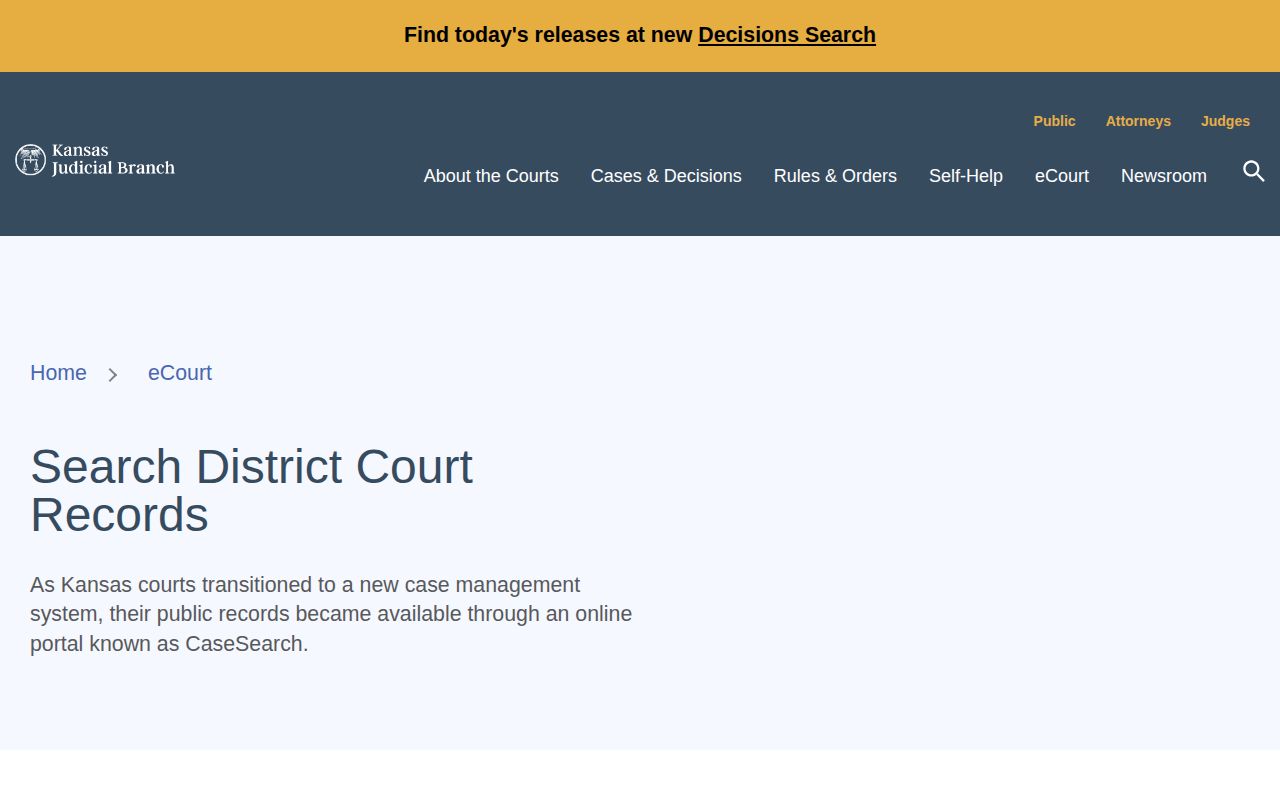
The image supports a narrow conclusion: failure to find a public case is expected in many juvenile matters and says nothing about release. An attorney or authorized participant can seek the controlling order through the proper case channel.
A court order may set a guardian handoff, placement, supervision condition, or agency transfer. The facility record documents the physical custody change. Neither should be disclosed beyond what law and court rules permit. Requests must be framed around authorized access, not public curiosity.
Separate Juvenile Release Systems
The Kansas correctional facility map helps distinguish county juvenile detention from state correctional sites. The matching image is useful for facility identity, not for locating a named child.

The county JDC handles short-term local juvenile detention. Kansas Juvenile Correctional Complex is a separate state juvenile facility. Topeka Correctional Facility is an adult state prison. The Shawnee Adult Detention Center is an adult county jail. Similar locations do not create shared public release-search rules.
| Facility | System | Release verification |
|---|---|---|
| County JDC | County juvenile | Authorized facility and court channels |
| KJCC | State juvenile | Authorized state juvenile and court channels |
| Adult Detention Center | County adult | County roster, booking, VINE, formal record |
| TCF | State adult | KASPER and KDOC records |
Read Juvenile Release Carefully
A release destination can be more sensitive than the release time. Guardian return, approved placement, and agency transfer each carry different duties and privacy concerns. A public-facing page should not identify a child, describe a placement, or promise access to a release history. The safe and accurate rule is to name official channels and their limits.
- Guardian release
- A court or agency-approved handoff to a responsible adult.
- Placement
- An approved setting where the juvenile is directed to live or receive services.
- Transfer
- A move to another juvenile authority or facility, not a public community release.
- Restricted record
- A record available only to people or entities authorized by law or court rule.
When the authorized sources conflict, the current court order and responsible juvenile agency should guide the next step. Do not fill a gap with an adult-search result. The lack of public data reflects access controls, not proof that no record exists.
Trace Juvenile Custody Changes
A custody chain shows which authority was responsible before and after a movement. At the Shawnee County Juvenile Detention Center, departure to a guardian differs from transfer to another juvenile facility. A court-approved placement may allow the young person to live outside detention while requirements continue. Another juvenile agency may assume responsibility without any public community release. The destination and continuing authority must be read together.
The adult jail calendar rule and adult booking-report practices should not be copied into this juvenile context. Likewise, a KASPER record concerns the adult KDOC population, and Kansas VINE serves adult county jails. Neither system proves a county juvenile release. The county JDC’s relationship to Shawnee County Department of Corrections establishes the operating agency, but it does not erase juvenile confidentiality or turn the adjacent adult jail portal into a juvenile locator.
If the question concerns whether a young person may be picked up, transported, or contacted, only the responsible facility, guardian, attorney, court, or juvenile agency should give instructions. A past schedule or secondhand report can become stale after a new order. Current official direction protects the juvenile and the people responsible for the handoff.
Note: A transfer ends custody at one location while another agency’s custody or supervision may begin at once.